
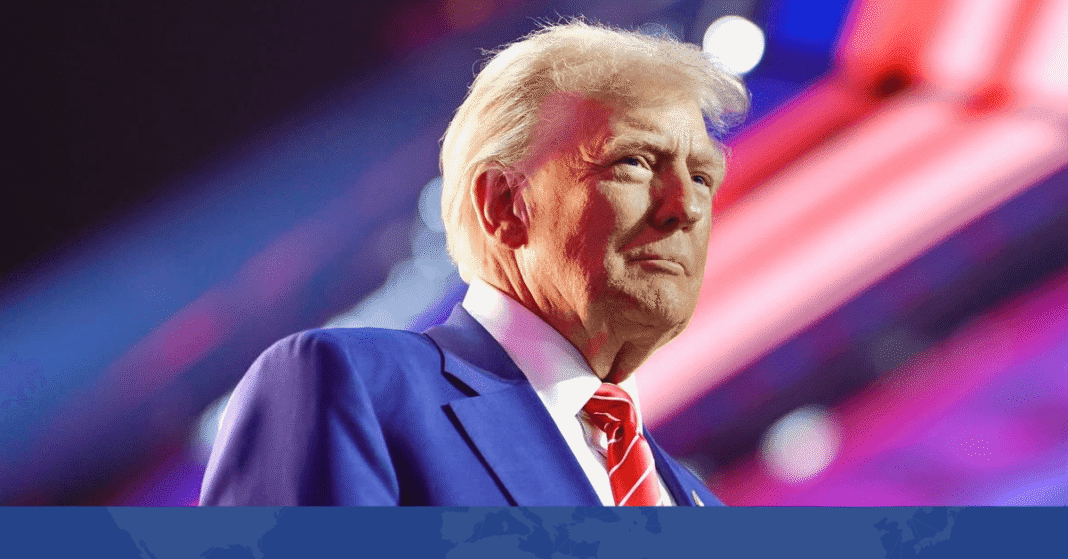

A BBC News report says anger is growing within the Republican Party following its heavy losses in the US midterm elections, with some party members blaming President Donald Trump for the defeat. They argue that his focus on his personal legacy and apparent lack of attention to voters’ concerns damaged Republican candidates and cost the party control of Congress.
After Democrats secured a series of unexpected victories in traditionally Republican states such as Texas, Kansas and South Carolina, some Republicans quickly turned their criticism towards Trump.
“It’s on him. It’s not on anybody else. It’s a total, complete rejection of President Trump,” Bill Miller, a leading Republican lobbyist in Texas, told the BBC.
“This is a disaster of the first magnitude. Nobody saw it coming like this,” he added.
Most Republicans had expected to lose control of the House of Representatives and recognised the difficulty of holding on to the Senate in an election cycle that traditionally favoured the party outside the White House.
However, some party members said Trump had dragged Republican candidates down through unpopular policies, low approval ratings and what they described as an excessive focus on construction projects in Washington.
“It was just one mistake after another,” said Gregg Peppin, a Republican strategist in Minnesota. “Clearly, in state after state, people did not like the president’s policies.”
A White House ally said public dissatisfaction with Trump over the war with Iran, tariffs and the administration’s immigration crackdown had created a “perfect storm” for Republicans in November.
“There’s palpable frustration [within] the party about how this has all played out,” the person said, adding that much of the anger was directed at Trump.
Democrats’ Victories Create a New Challenge for Trump
The BBC spoke to a dozen Republican party operatives, campaign officials, White House allies and others to assess Trump’s handling of the midterm elections. Many spoke on condition of anonymity to offer a candid assessment.
Republicans had hoped for a stronger performance that could have given the party momentum heading towards the 2028 presidential election.
Instead, Trump now faces a Democratic majority in Congress that is eager to investigate his administration, block his judicial nominees and challenge the rest of his political agenda.
The results have opened an uncertain new chapter in Trump’s second term and could force Republicans to consider what the party’s future might look like after his presidency.
Steve Scheffler, the Republican National Committeeman in Iowa, said before the election that he did not believe Trump’s influence was declining. However, he acknowledged that there were things the president could have said differently during the campaign.
Trump remained silent for much of election night. After Democrats were projected to win control of both the House and Senate, he posted a message on Truth Social.
“I wasn’t on the Ballot and if I was, we would have won IN A LANDSLIDE! Thank you for your attention to this matter,” he wrote.
In later interviews with The New York Times and Fox News, Trump said he would accept the election results. He told Fox News he was “a little bit surprised” by the outcome, while pointing out that the president’s party traditionally performs poorly in midterm elections.
Democrats Break Through in Traditionally Republican States
Since 1934, the party occupying the White House has gained seats in only three midterm elections.
Although the Democratic gains in 2026 did not set a record, the party won dozens of House races, state governor contests and Senate seats, including in areas where Democrats had struggled to compete for decades.
Before Tuesday’s election, Democrats had not won a Senate seat in Kansas since 1932. They had also failed to win a statewide race in Texas for more than three decades.
The party also secured unexpected victories in other reliably Republican states, including South Carolina, where several races had been considered safe for Republicans only weeks before polling day.
Trump and Vice-President JD Vance held dozens of campaign rallies ahead of the elections. MAGA Inc., the main Super PAC aligned with Trump, spent hundreds of millions of dollars supporting Republican candidates.
However, Trump’s allies argued that it was unfair to hold him solely responsible for the losses. They pointed to the historical difficulties faced by the party in power during midterm elections and blamed weak Republican candidates in battleground states such as Georgia, Michigan and Texas.
In Texas, Republican Senate nominee Ken Paxton was criticised by a party operative who described his campaign as “the worst Senate campaign in the country from either side of the aisle”.
The source, who spoke anonymously, said they would be surprised if Paxton’s campaign had knocked on 100,000 doors. They also praised his Democratic opponent, James Talarico, for running “a really good and smart campaign”.
Trump’s Campaign Strategy Under Scrutiny
Some Republicans defended Trump’s campaign schedule, arguing that he had to balance his responsibilities as president with campaigning for candidates.
“He’s the president. He’s not going to spend his time campaigning 24/7,” said Krish Mathrani, the Michigan Republican Party’s youth chair.
Mathrani argued that Trump’s rallies helped increase enthusiasm among Republican supporters, describing him as a “turnout machine”.
However, while Trump’s ability to mobilise voters has helped him in presidential elections, his campaign operation has struggled to deliver similar results when he himself is not on the ballot. The 2026 midterms followed that pattern.
Voters also rejected Trump’s claims that the economy had improved under his leadership and that he was achieving his objectives in the war with Iran.
His attempts to portray Democratic candidates as extreme socialists also failed to gain traction. In North Carolina, moderate candidate Roy Cooper secured a victory.
“That just didn’t work with Cooper,” a member of Cooper’s campaign team said. “Trying to tag him as some socialist liberal, that wasn’t going to fly.”
Focus on Iran War and Washington Projects
During the summer, when Republicans in Congress began concentrating on the midterm elections, Trump often appeared less interested in the campaign.
He was heavily occupied with the war involving Iran and a series of construction and renovation projects in Washington.
Those projects included a ballroom under construction and a helipad on the White House’s South Lawn, renovations to a local golf course, a proposed memorial arch near Arlington Cemetery and work on the Kennedy Center.
Several sources said events such as a UFC match held at the White House on Trump’s 80th birthday in June gave the impression that he was more interested in celebrating himself than helping Republican candidates win.
Trump also repeatedly played down rising petrol prices and often dismissed concerns about affordability as a Democratic hoax.
He turned his full attention to the midterms in September, when Republicans held a special midterm convention in Dallas. The event was unusual, as the party had not organised a midterm convention in decades.
However, Trump dominated the gathering, frustrating Republicans who wanted greater attention given to the party’s candidates.
During a lengthy keynote speech, Trump promised to give $5,000 (£3,700) to anyone who voted Republican. He also attracted criticism after endorsing Paxton while making extended comments about the candidate’s lack of charisma and physical appearance.
“Obviously, that’s never helpful,” said Robin Armstrong, Texas’ Republican National Committeeman.
“You’re not going to stop what President Trump says. We just have to kind of live with that,” he added.
The convention failed to attract a large television audience. Democrats quickly described it as a failure.
“It backfired for Republicans because nobody paid any attention to it,” said Terri Burke, executive director of the Texas Democratic Party.
Trump continued to make controversial remarks during the final weeks of campaigning. He attracted attention for praising the physique of Ohio Republican Senator John Husted and faced criticism after describing Abdul El-Sayed as a “jihadist” during the Michigan Senate race.
White House Controversies Added to Republican Problems
While Trump travelled across the country campaigning for Republican candidates, the White House faced a series of controversies.
Katie Zacharia was removed from her position after just five days as White House press secretary. Kimberly Guilfoyle also resigned as US ambassador to Greece after reports emerged that she had asked a donor to pay her credit card debt.
In October, Trump faced further criticism after striking a deal to buy Russian diesel.
The agreement reportedly took members of Congress by surprise and drew criticism from some Republicans. It came only weeks after Trump had signed a sanctions bill intended to cut off Russia’s oil and gas revenues.
Democrats used the deal, along with other controversies surrounding the White House, to argue that they should regain control of Congress.
Their message ultimately resonated with voters, allowing Democrats to win control of both chambers convincingly.
A second White House ally said the president’s political advisers continued to project confidence until the final days of the campaign, even as it became increasingly clear that Republicans were heading towards defeat.
Republicans Begin Looking Beyond Trump to 2028
As Republicans assess the scale of their losses, some party members are already looking towards the next presidential election in 2028.
Scheffler said the party had several potential candidates, including JD Vance, Marco Rubio and Ted Cruz.
“We’ve got a pretty big bench,” he said. “It’ll be a wide open race.”
Republican strategist Peppin argued that the election results showed the party needed a new direction.
“I sincerely hope that we’ve turned the page from the Trump era, and that we’ll have new players, new issues and a new focus moving forward,” he said.
The midterm defeat has intensified divisions within the Republican Party, with some members defending Trump while others argue that the party must begin preparing for a political future beyond his leadership.
According to the BBC News report, the election result has raised serious questions about Trump’s political influence and the direction of the Republican Party ahead of the 2028 presidential race.
Source: BBC News