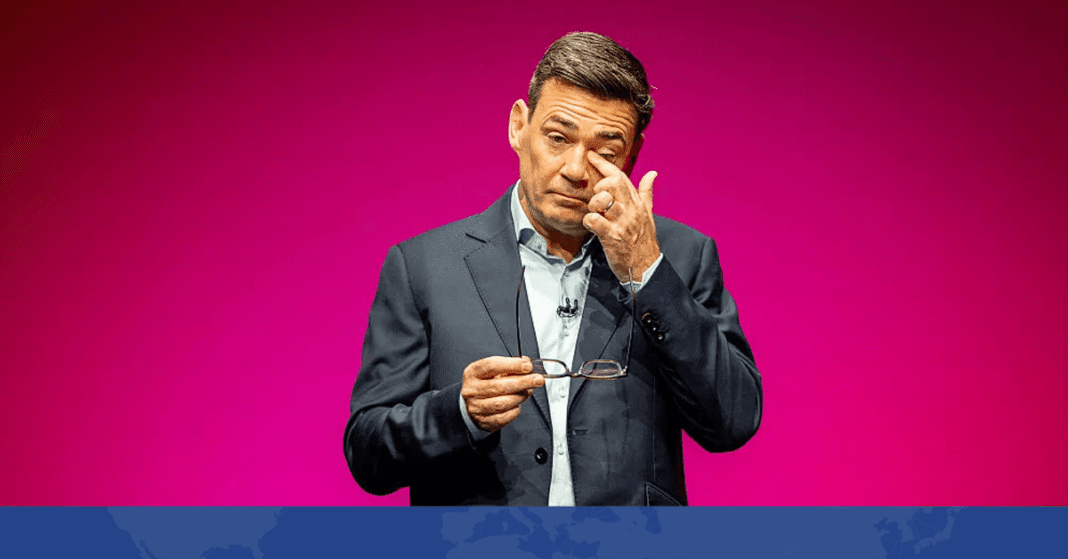

Prime Minister Andy Burnham is expected to argue that Brexit has failed to deliver its promised benefits, saying the UK has lost more than it has gained from leaving the European Union. His remarks come ahead of a UK-EU summit later this week, where both sides are expected to discuss new agreements on food, energy and youth mobility.
UK Prime Minister Andy Burnham is set to criticise the country’s Brexit settlement, arguing that leaving the European Union has created unnecessary barriers for businesses and failed to deliver on the promise of taking back control.
Speaking at the Lord Mayor’s Banquet on Monday, Burnham is expected to describe the UK’s Brexit deal as the “emperor’s new clothes” and say that “a needlessly hard Brexit” has left the country worse off.
“The Brexit we were given has not worked. We have lost more than we have gained,” he is expected to say.
According to a BBC News report by political reporter Becky Morton, Burnham’s comments come ahead of a UK-EU summit scheduled for Friday, where the government hopes to secure new agreements covering food, energy and youth mobility.
The substance of the proposed agreements was largely established under his predecessor, former Prime Minister Sir Keir Starmer.
Burnham sets three conditions for new EU agreements
Ahead of the summit, Burnham is expected to outline three key tests for any agreement with the European Union.
First, any deal must remain consistent with Labour’s 2024 general election manifesto commitment not to rejoin the EU single market or customs union, or restore freedom of movement.
Second, the agreement must improve the original Brexit settlement and bring it closer to what voters believed they were voting for in the 2016 referendum.
Third, it must pass what Burnham calls the “Makerfield test” by delivering practical improvements to people’s everyday lives. The reference is to voters in his Greater Manchester constituency.
He is expected to describe a new agreement as a “win-win” and an example of a more constructive relationship between the UK and the EU.
“Not adversarial. No longer burning bridges. But being constructive and positive – showing that we can come together to confront shared challenges,” he is expected to say.
Food exports and trade among key priorities
The summit is expected to focus on further changes to the agreement reached between the UK and EU in May 2025, covering fishing, trade and other areas.
The two sides have already agreed a draft deal aimed at removing post-Brexit checks on food and agricultural exports.
The government believes the agreement could reduce costs for businesses and potentially lower prices for consumers.
However, critics argue that the arrangements would make the UK a “rule taker” by requiring it to follow EU regulations without having a vote in setting them.
Draft agreements on emissions trading and a youth travel and work scheme have also been circulated to EU member states. These proposals were close to completion under Starmer, with some details still requiring agreement.
Government rules out major changes before next election
Burnham has said he wants to examine the “pros and cons” of different options for Britain’s long-term relationship with the European Union.
Foreign Secretary Ed Miliband told the BBC that the prime minister would set out the possible options after the UK-EU summit.
However, Burnham has ruled out making major changes to the relationship before the next general election.
During the Makerfield by-election campaign that brought him back to Parliament, he had promised not to “re-run” the Brexit debate and said he was not proposing that the UK consider rejoining the EU.
Since becoming prime minister, however, he has indicated that future options could range from maintaining the current arrangements to rejoining the customs union or single market, or holding a fresh referendum on full EU membership.
He has stressed that any significant changes would require a public mandate at a general election.
Conservatives accuse Labour of moving closer to EU
The Conservatives have accused Labour of trying to bring the UK back into the European Union “via the back door”.
Former Prime Minister Boris Johnson, who led the UK when it formally left the EU in 2020 and negotiated the original Brexit deal, has warned Burnham against making Europe a political priority.
Speaking to the Daily Telegraph, Johnson said he believed the public would support Brexit again if Burnham forced another vote on the issue.
He described the move as “madness” and warned that the prime minister and his party could suffer politically.
Deputy Conservative leader Alex Burghart also accused Burnham of reopening a debate that the country had settled while ignoring more pressing challenges facing Britain.
Reform UK said one of Brexit’s key benefits was that Britain no longer had to follow what it called “ridiculous EU rules”. The party argued that closer alignment with EU regulations could negatively affect the UK’s trade policy.
Opposition parties divided over Brexit reset
Other opposition parties have also expressed different views on the proposed agreements.
The Liberal Democrats described the draft food-export agreement as a “patch, not a fix”, arguing that the UK should rejoin the single market and establish a customs union with the EU.
The Green Party of England and Wales has also called for the UK to rejoin the customs union. Party leader Zack Polanski has previously said that full EU membership remains the best option for the country.
The debate over Britain’s future relationship with the European Union is therefore expected to remain a major political issue as Burnham prepares for this week’s summit.
Source: BBC News