
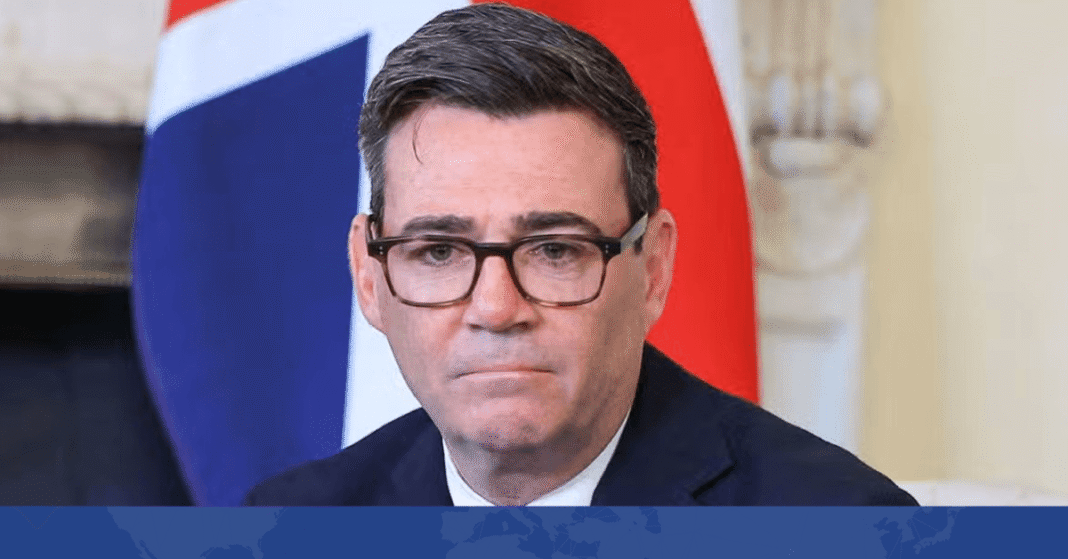

UK Prime Minister Andy Burnham has urged households to keep essential supplies, including bottled water and tinned food, at home to prepare for emergencies such as severe weather, cyberattacks and other major disruptions.
The advice comes as storms batter parts of the UK and concerns grow over the potential impact of cyberattacks and climate-related emergencies on the country’s food supply chain.
Speaking to BBC Radio 5 Live’s Matt Chorley at a wildfire resilience summit in Liverpool, Burnham said unexpected events appeared to be becoming increasingly common. He stressed that the advice was not intended to cause panic but to encourage people to take sensible precautions.
“It’s not about panicking,” Burnham said. “It’s about just taking sensible measures to have enough in the house to tide you over should there be a difficult situation.”
The government recommends that households maintain enough basic supplies to last for three days during an emergency. Its checklist includes nine litres of water per person, along with non-perishable food such as tinned meat and vegetables or dried fruit.
Burnham said he personally kept baked beans and soup in his cupboards. He also mentioned Twiglets, adding that he was not sure he could manage for long without the snack.
The guidance follows a warning from the National Audit Office last month that the UK’s food supply chain faces growing risks from cyberattacks and the climate crisis. The watchdog said the Department for Environment, Food and Rural Affairs (Defra) had not done enough in recent years to strengthen the resilience of the supply chain.
The chief executive of the Cold Chain Federation, which represents businesses transporting temperature-controlled food, also told the BBC that the UK was being targeted by Russian cyber-hackers who understood vulnerabilities in the food supply system.
Burnham rejected suggestions that the government had failed to prepare adequately for emergencies. He said the aim was to encourage people to become better prepared for situations such as severe weather and power cuts.
He also expressed concern for people in Cornwall who were without electricity amid the storms.
What Should Households Keep at Home?
The government’s emergency checklist recommends keeping the following items available:
- Water: Nine litres per person, enough for three days.
- Non-perishable food: Tinned meat and vegetables, dried fruit and other long-lasting essentials.
- Radio: A battery-powered or wind-up FM radio to receive emergency news and safety updates.
- Lighting: A torch and spare batteries, where needed.
- Communication: A charged power bank for mobile devices.
- Hygiene supplies: Hand sanitiser, wet wipes and toiletries.
- First aid: A first-aid kit and essential medical supplies.
- Warmth: Blankets and other basic necessities.
- Cash: Money to use if electronic payment systems stop working.
- Important documents: Copies of essential paperwork.
- Family-specific supplies: Food for pets and supplies for babies, where required.
The government says an FM radio could be particularly important during a severe power cut, when people may need to receive updates about public safety and health.
Political Leaders Respond to the Advice
Treasury minister James Murray told BBC Breakfast that he had not yet followed all the government’s advice on emergency supplies. He said he had coffee stocked at home and noted that countries including Ireland, France and the Netherlands had offered similar guidance for some time.
Conservative leader Kemi Badenoch said she was already stocked up for the week. However, she questioned whether the government was adequately explaining the risks facing the country and what it was doing to address them.
Badenoch pointed to concerns about defence, cyberattacks and hybrid warfare, arguing that households stocking up on supplies was only one part of preparing for emergencies.
The government’s guidance is intended to help households manage short-term disruptions while authorities respond to a crisis. Officials are encouraging people to take practical steps now rather than wait until essential supplies become difficult to obtain.
Source: BBC