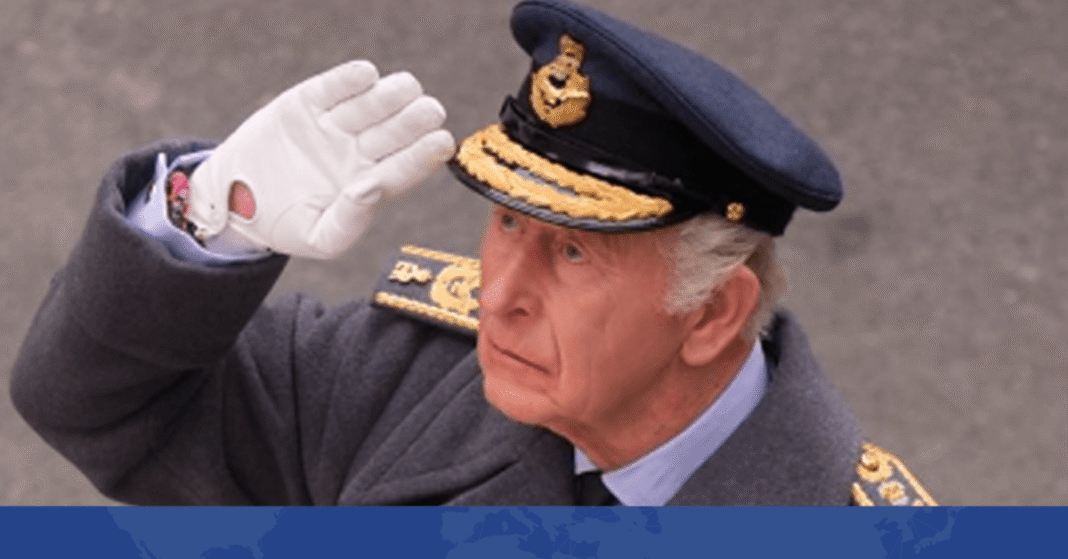

King Charles III has led the Royal Family, political leaders and thousands of veterans in a solemn Remembrance Sunday service at the Cenotaph in central London, honouring members of the armed forces who lost their lives in conflicts.
According to a BBC News report, the King observed the two-minute silence at 11:00 GMT before laying a wreath at the Cenotaph in Whitehall. The ceremony took place on a cold, overcast autumn morning and was followed by a march-past involving around 10,000 armed forces veterans.
Among those taking part were a declining number of Second World War veterans. Just 12 participated this year, compared with 20 last year. The oldest participant was 105.
The event also saw a record number of former prime ministers in attendance, with nine gathering to lay wreaths. Andy Burnham attended for the first time as the current prime minister.
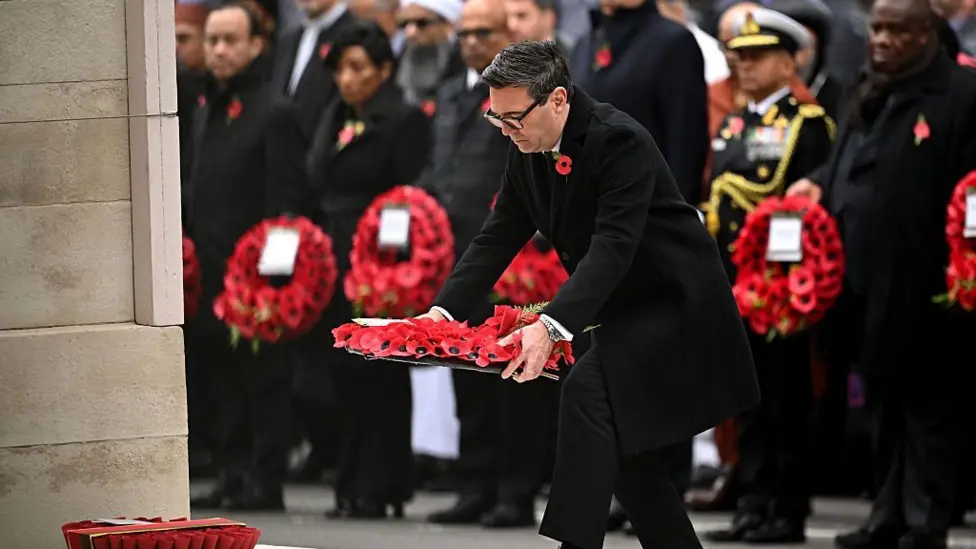
For the first time, Reform UK leader Nigel Farage also qualified to lay a wreath alongside other major political party leaders, following the party’s increased representation in Parliament.
Royal Family and Political Leaders Attend Ceremony
The Prince of Wales and the Princess Royal were among the members of the Royal Family attending the service, alongside military chiefs, senior politicians, diplomats and religious leaders.
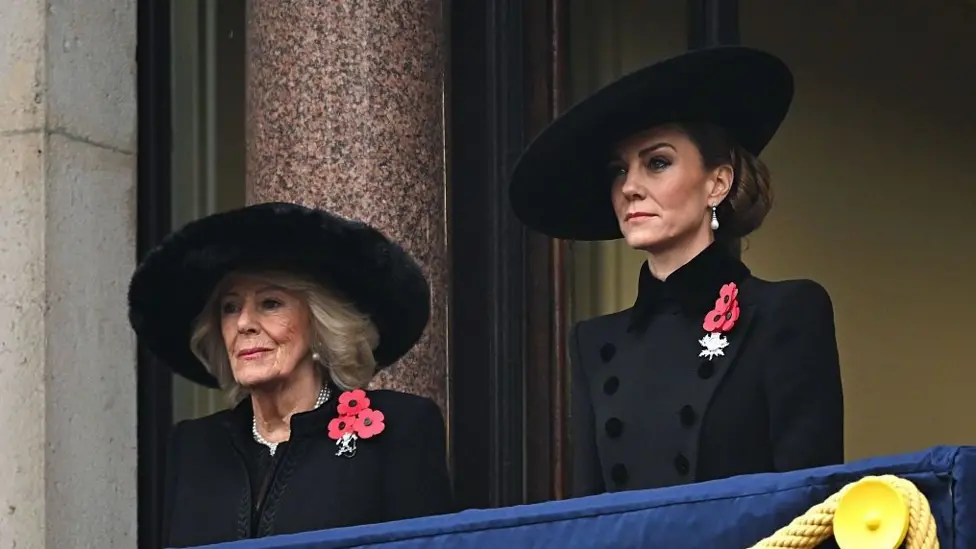
Queen Camilla and Catherine, Princess of Wales, watched the ceremony from a balcony at the Foreign, Commonwealth and Development Office overlooking the Cenotaph.
The King laid a wreath bearing a handwritten message: “In everlasting remembrance”.
At 11:00 GMT, as Big Ben struck its first chime from the nearby Houses of Parliament, crowds across Whitehall fell silent for two minutes. The silence was followed by the playing of the Last Post.
The King stood with his eyes closed as thousands of people paused to remember those who had died in military service.
Around 10,000 Veterans Take Part in March-Past
The march-past included representatives from around 340 military and civilian organisations.
Among them were the Royal Naval Association, the Royal Marines Association, Transport for London and the Royal National Lifeboat Institution.
Veterans also took part using mobility scooters, while families and helpers supported those in wheelchairs.
The number of surviving Second World War veterans able to participate continues to decline. Twelve took part this year, compared with 20 in 2025.
103-Year-Old Annie Duplock Takes Part for First Time
One of the most moving moments of the ceremony was the participation of 103-year-old Annie Duplock, who represented the Women’s Land Army.
Duplock joined the Land Army in 1940 at the age of 16 after lying about her age. She worked on a farm in Leicestershire, helping to produce food for the country during the war.
Speaking ahead of the event, she said she felt honoured to take part and represent the Land Girls.
“I feel very honoured to be taking part in the parade and to represent the Land Girls. I’m very excited, although a little apprehensive as I don’t quite know what to expect,” she said.
She added that the occasion would be emotional because it would bring back memories of those who never returned home.
“I think it will be a very emotional day, bringing back memories of all those who didn’t return home. It will be lovely to be there and remember them,” she said.
Prime Minister Pays Tribute to Veterans
Prime Minister Andy Burnham described Remembrance Sunday as an opportunity to reflect on the courage and selflessness of those who dedicate their lives to protecting others.
He said the annual ceremony was a time to remember the sacrifices made by generations of service personnel.
Earlier, Burnham announced plans to address homelessness among former members of the armed forces. He said he wanted to ensure that any veteran sleeping rough was offered suitable accommodation before Christmas.
Mark Atkinson, director general of the Royal British Legion, also paid tribute to those who had served.
“As we come together on Remembrance Sunday, we pay tribute to all those who have served and sacrificed, from generations past to those still serving today,” he said.
The Archbishop of Canterbury, Dame Sarah Mullally, led prayers during the ceremony.
The History Behind the Cenotaph
The national Remembrance service has been held at the Cenotaph for more than a century.
The monument was created as a central place to honour those who fought and died in the First World War, including service personnel whose bodies were never recovered or who had no known grave.
It also provided a place for families to mourn those they could not visit in overseas military cemeteries.
The word “Cenotaph” comes from Greek and means “empty tomb”. The monument was designed by architect Sir Edwin Lutyens in a simple and austere style, without elaborate decoration or any sense of triumphalism.
Originally built in 1919 as a temporary structure made of wood and plaster, it became so popular with the public that a permanent stone version was commissioned in the same design.
King George V officially opened the permanent Cenotaph at 11:00 on 11 November 1920.
More than 106 years later, his great-grandson King Charles III returned to the monument on another overcast morning to lead the nation in remembering those who made the ultimate sacrifice in war.
Source: BBC News